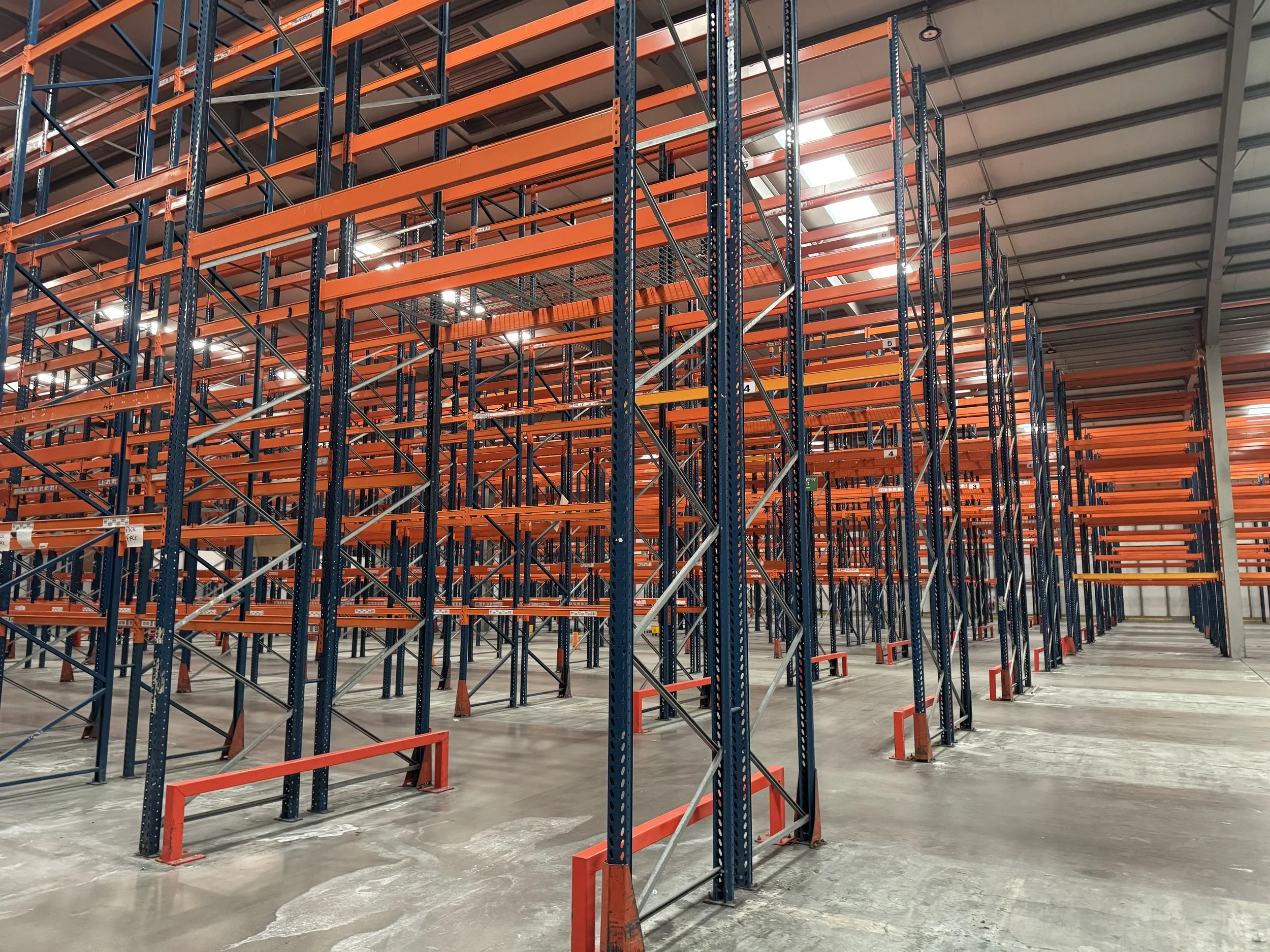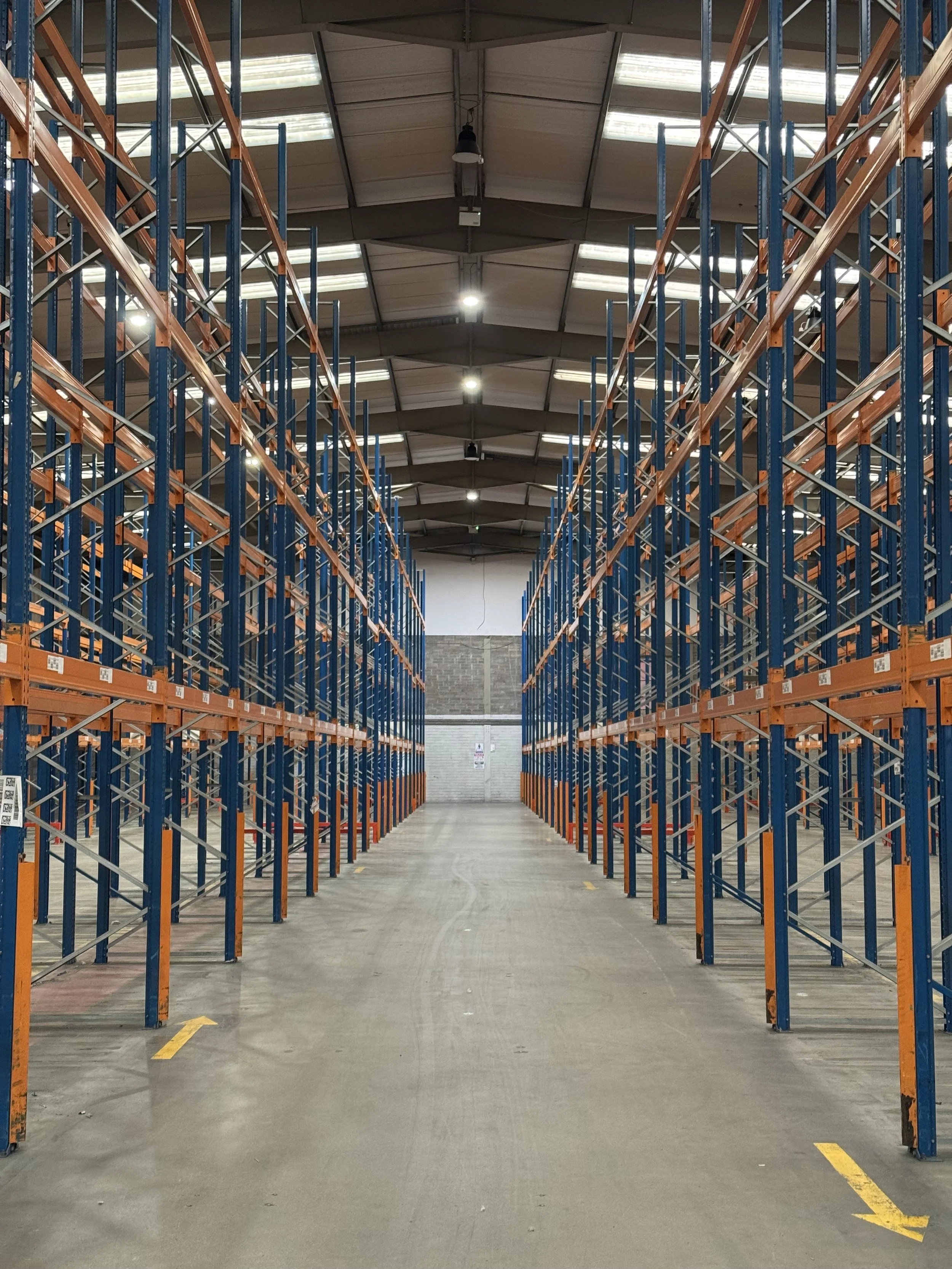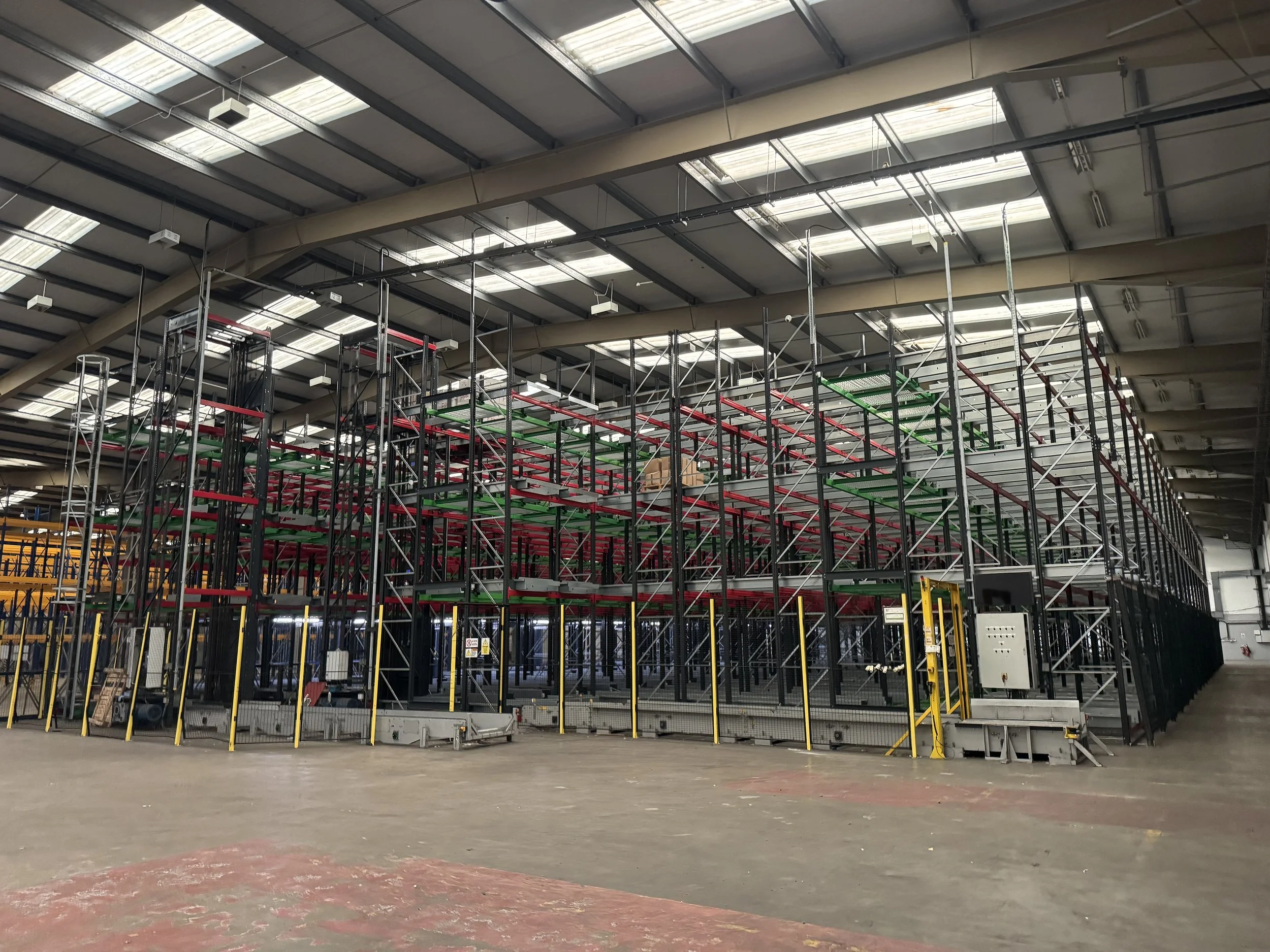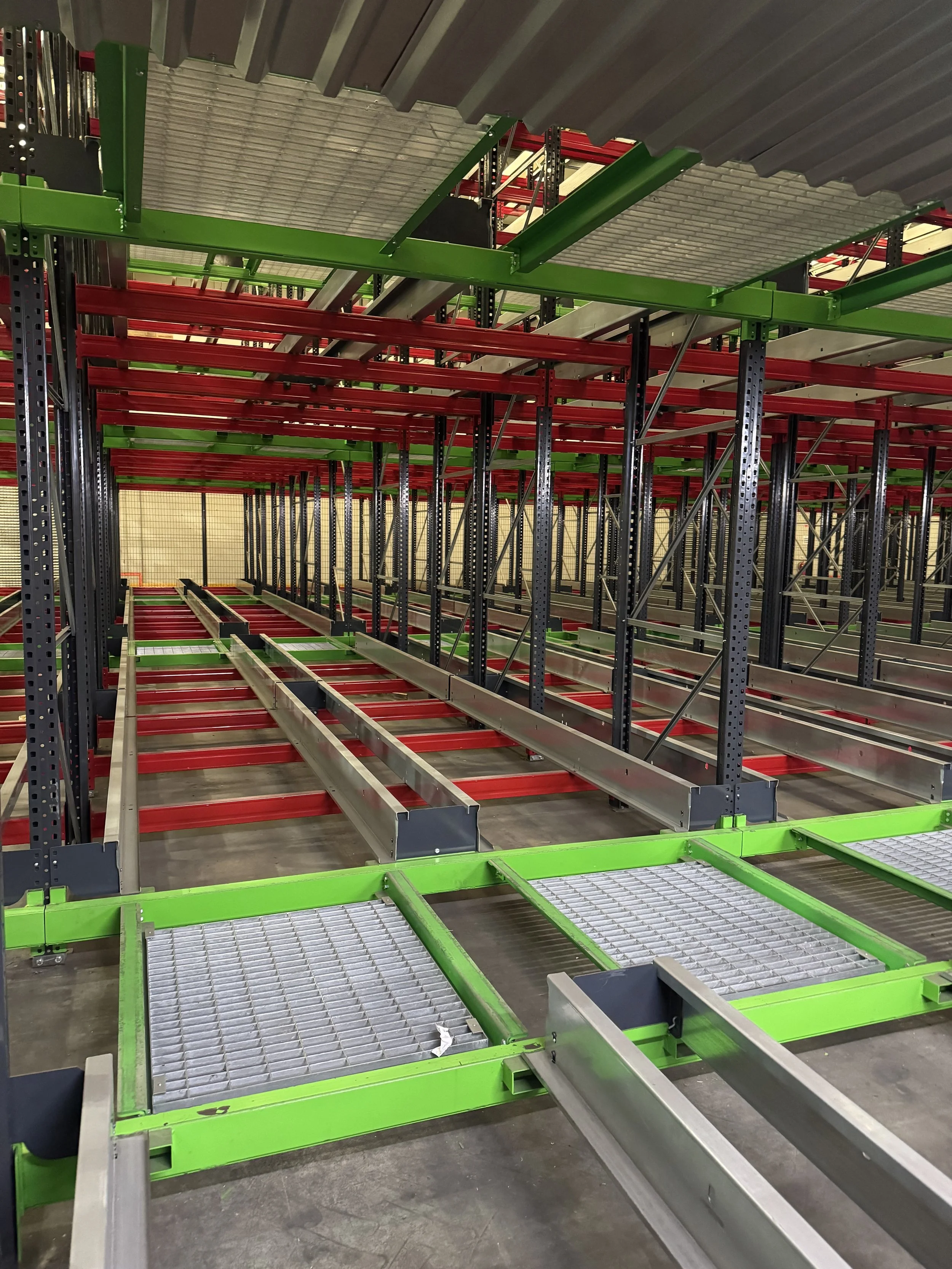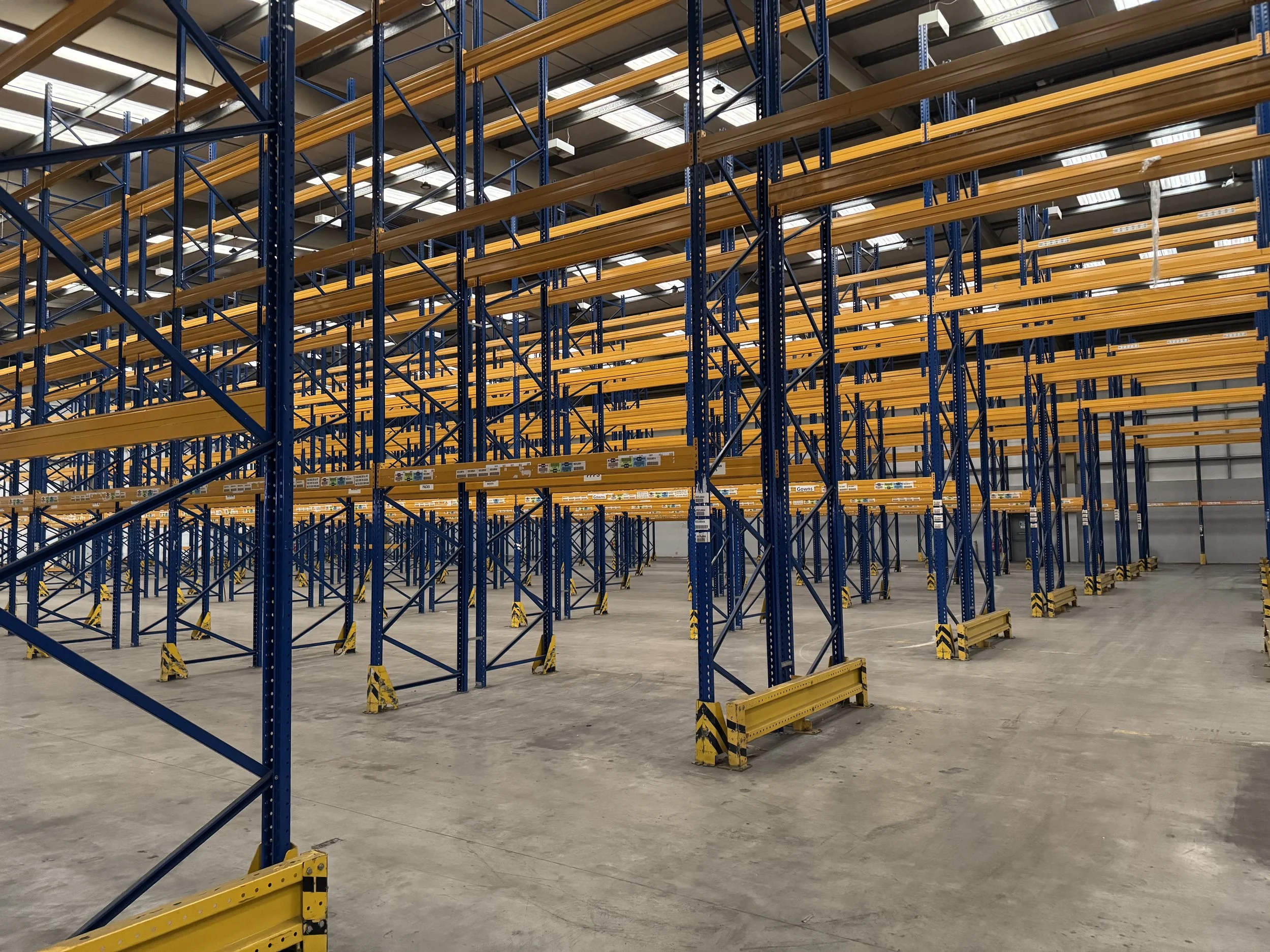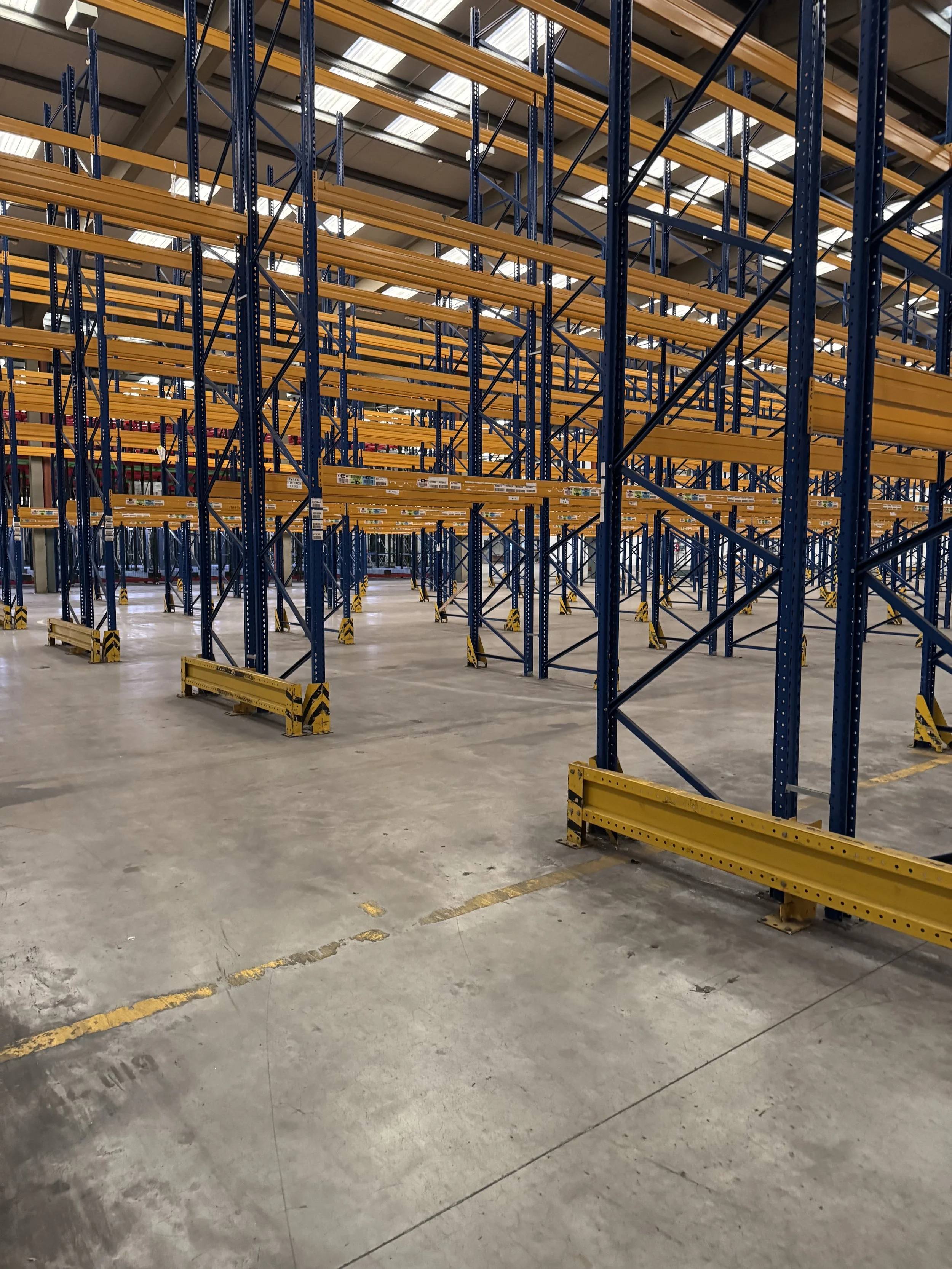
Used Pallet Racking: Risky Shortcut or Sensible Engineering Choice?
The real question isn’t whether racking is new or used. It’s whether it is suitable, correctly assessed, properly designed and professionally installed.
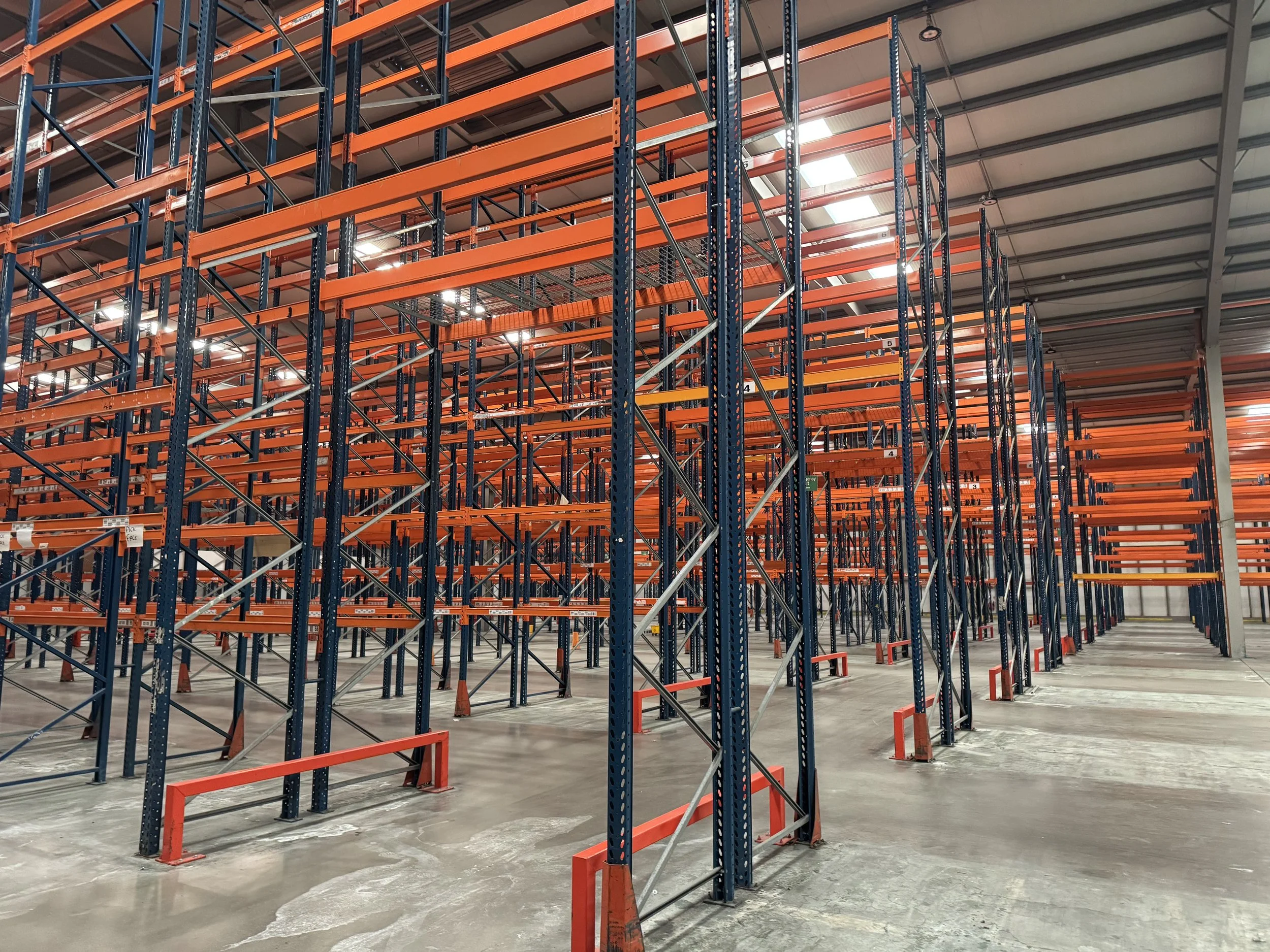
There is often a perception within the storage equipment industry that second-hand pallet racking automatically carries greater risk than new equipment.
There are certainly genuine concerns within the used market. Unknown provenance, previous damage, inappropriate repairs, corrosion, missing load information and poor installation can all create serious problems.
At Toddsleap Racking & Shelving, we agree on one important point:
Bad second-hand racking is a bad investment.
Where we disagree is with the idea that second-hand racking itself is the problem.
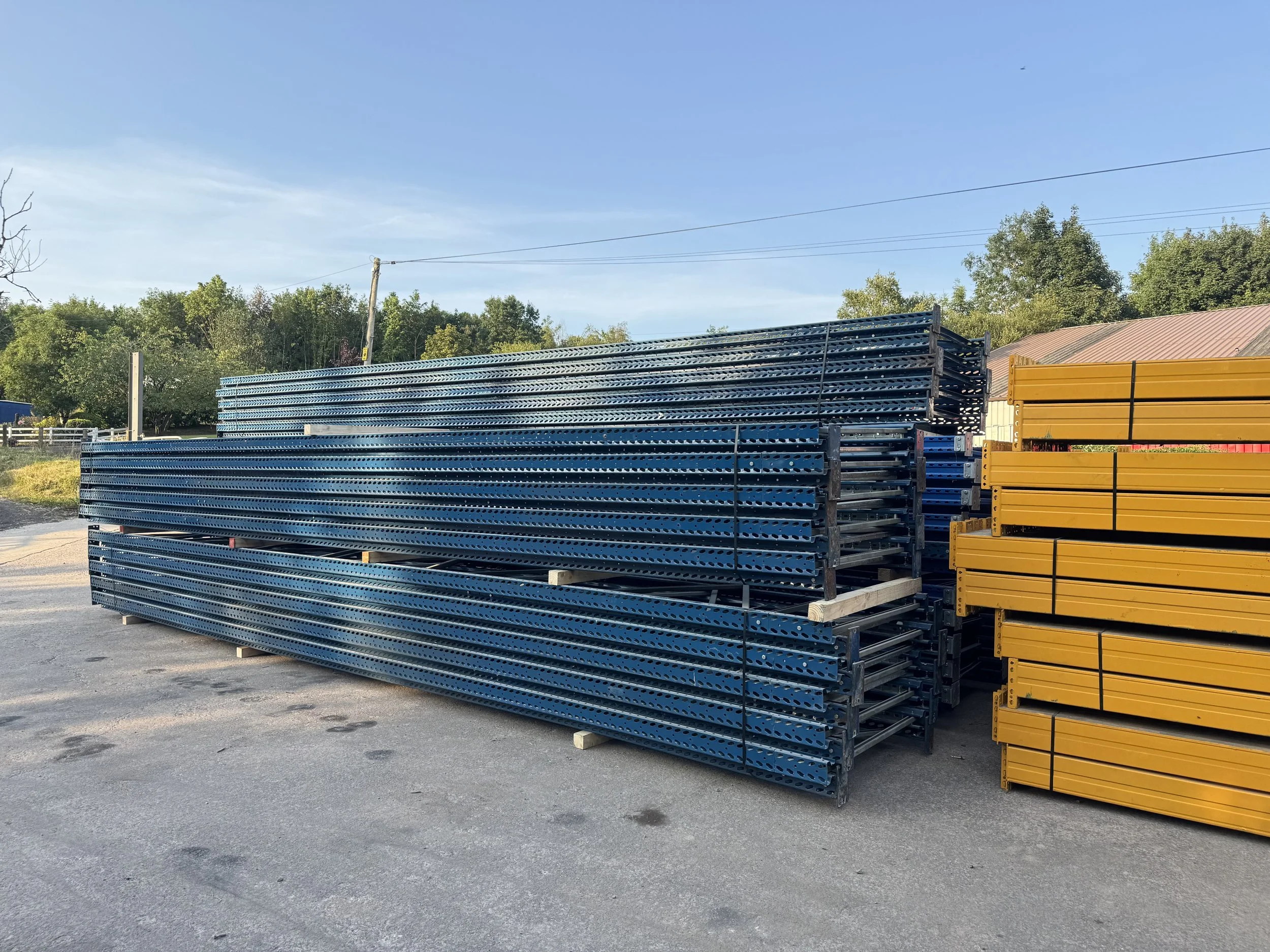
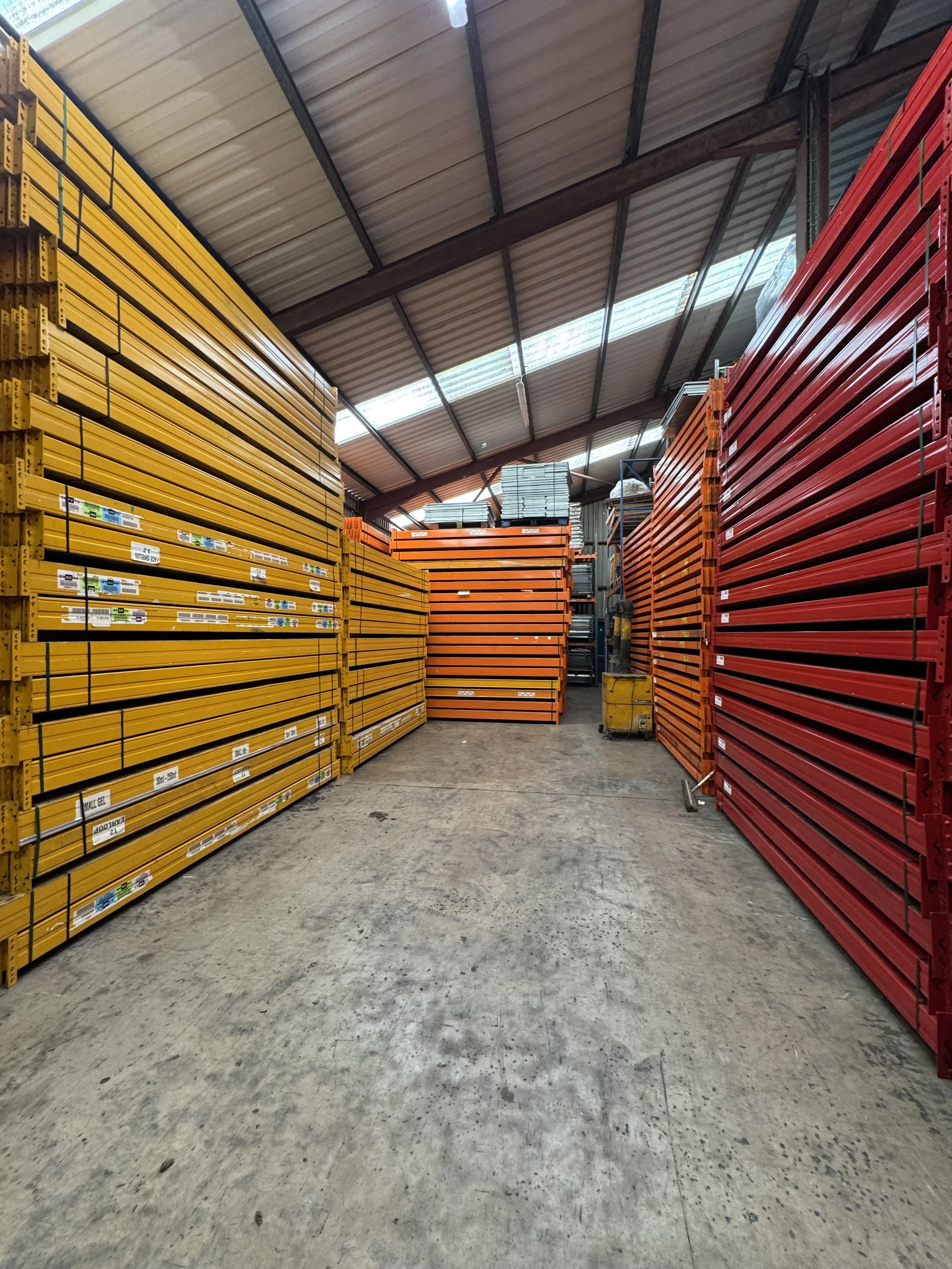
There is an enormous difference between buying an unidentified collection of used frames and beams from an online marketplace and purchasing a properly sourced, inspected, identified, designed and professionally installed used storage system from an established racking specialist.
Those two things should not be confused.
Used does not mean unsafe — and new does not automatically mean superior
The fundamental requirement for any storage system is that it is suitable for its intended application and capable of safely supporting the loads placed upon it.
That applies regardless of its age.
UK health and safety guidance requires work equipment to be suitable for its intended use, maintained in a safe condition and, where appropriate, inspected to ensure it has been correctly installed and has not deteriorated.
The same principles apply to second-hand equipment. Used equipment cannot simply be supplied without consideration for its condition, suitability and intended application.
Equally, being new does not automatically guarantee that a storage installation is the best solution for a particular warehouse.
Modern pallet racking is sophisticated structural engineering. Systems are increasingly designed around specific loads, configurations and operating requirements.
There is nothing wrong with this approach. Properly designed modern systems are safe and efficient.
However, buyers should understand exactly what they are purchasing.
The important comparison should not simply be:
New versus used.
It should be:
What capacity am I actually getting? What assumptions have been made in the design? What configuration is permitted? What flexibility do I have in future? And who is standing over the finished installation?
In some circumstances, established older systems may use heavier sections or different profiles from contemporary alternatives.
That does not automatically make older equipment stronger or more suitable, and capacity should never be assumed purely from the thickness or appearance of the steel.
But equally, a substantial, good-quality used system should not be dismissed simply because it has previously been installed elsewhere.
It should be assessed on its engineering merits.
The used-racking market does have a problem
There are suppliers operating within the second-hand storage equipment market who have damaged the reputation of the sector.
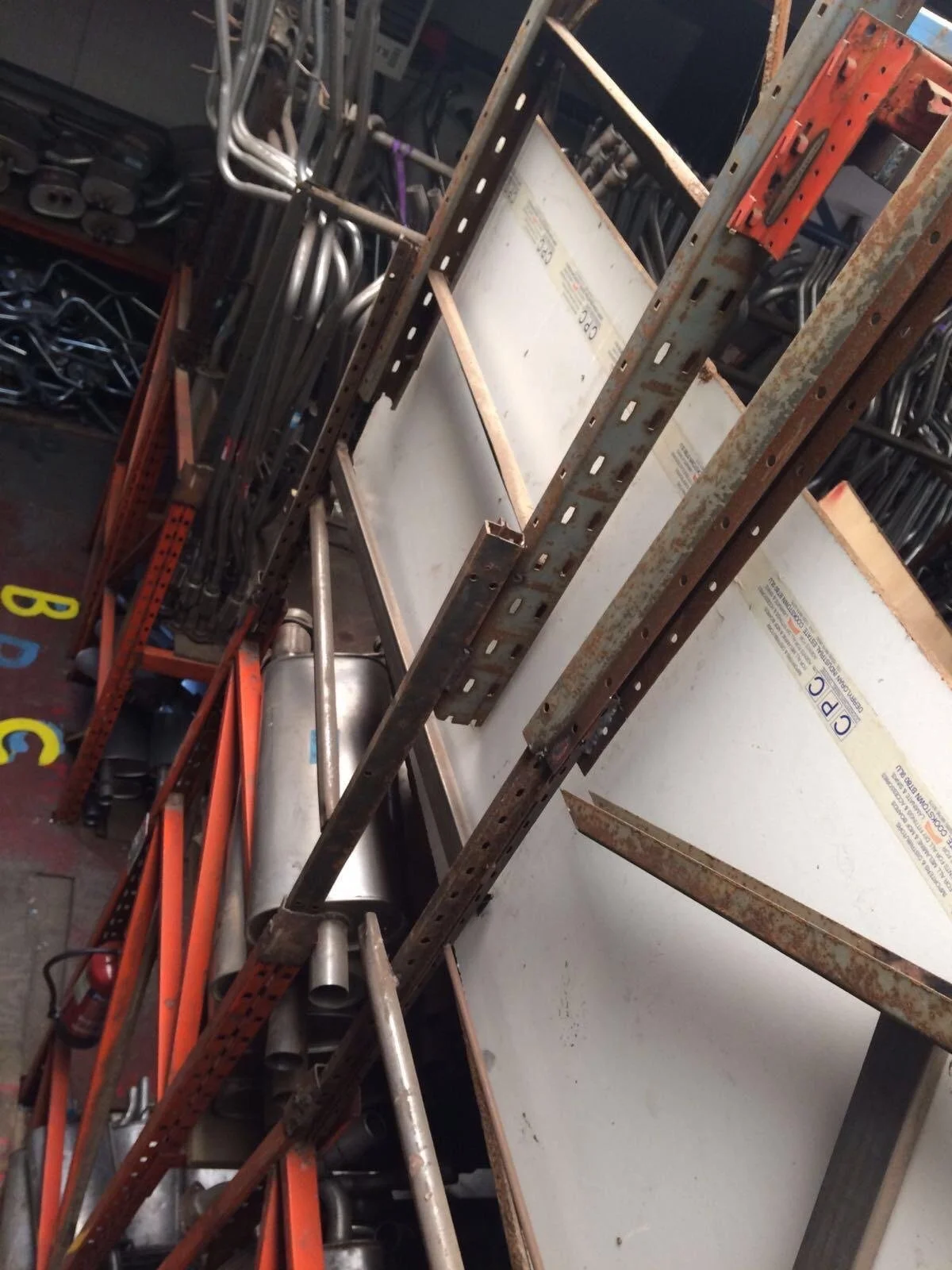
Mixed manufacturers and incompatible components, unidentified frames, damaged uprights, excessive corrosion, unsuitable alterations, incorrect loading information and poor-quality installation all have the potential to create serious safety problems.
We do not defend that part of the industry.
In fact, reputable used-racking suppliers should be among its strongest critics.
The answer to poor-quality second-hand racking should not be to condemn reuse altogether.
The answer should be to raise the standard by which used equipment is sourced, assessed, designed, documented and installed.
Used racking should be an engineered product — not a pile of second-hand steel
This is where the professional supplier becomes important.
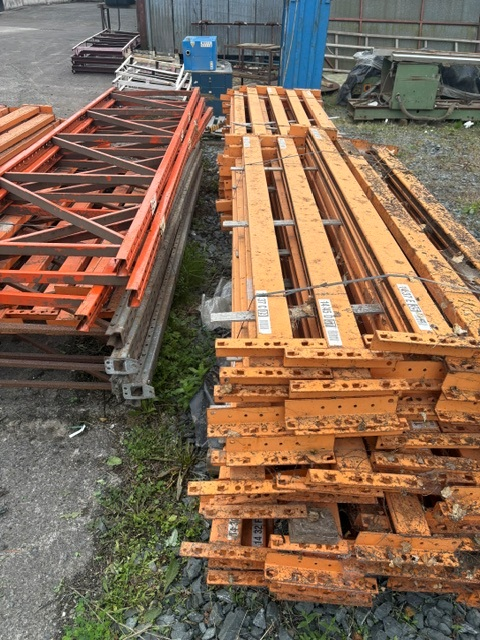
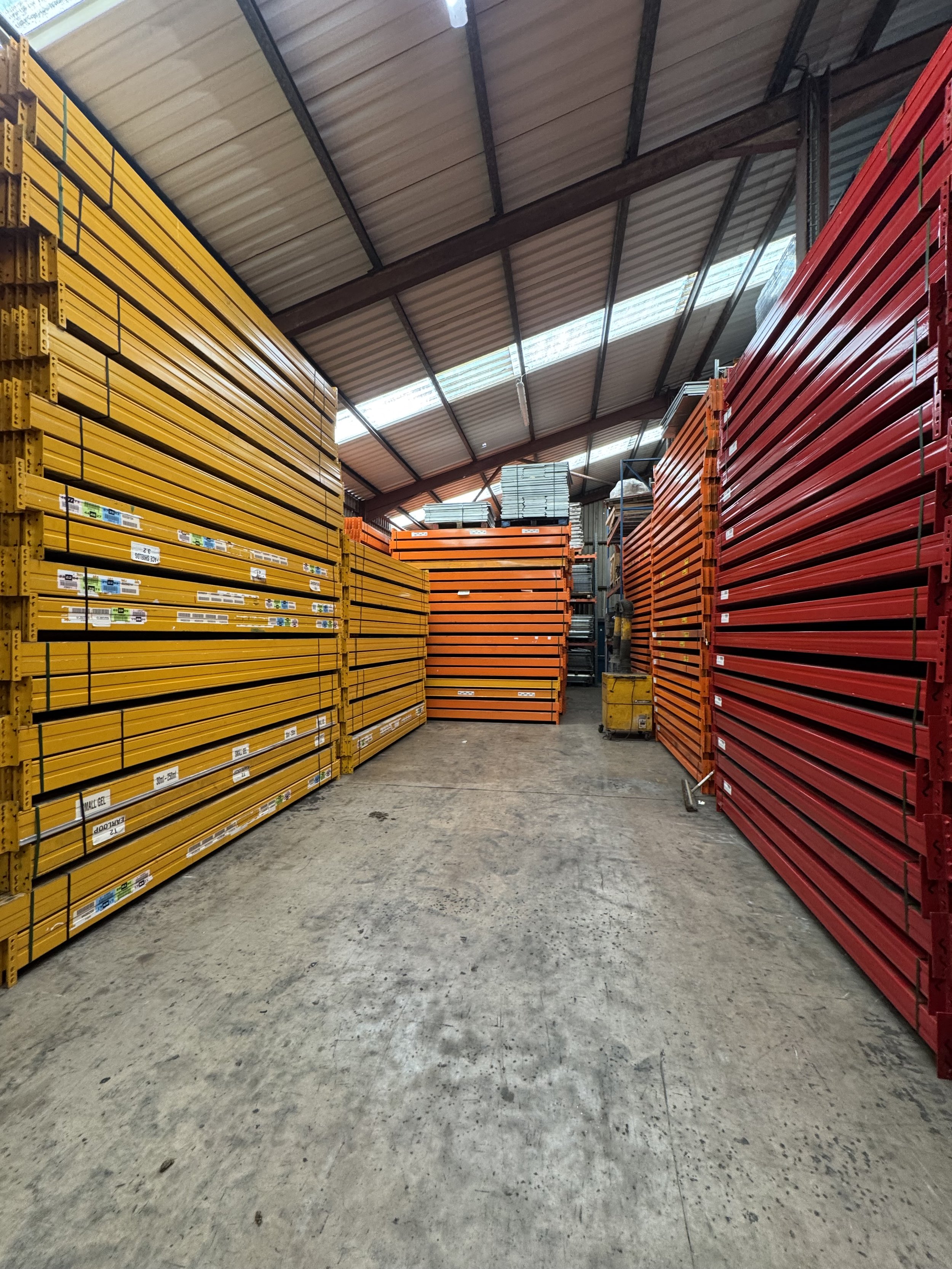
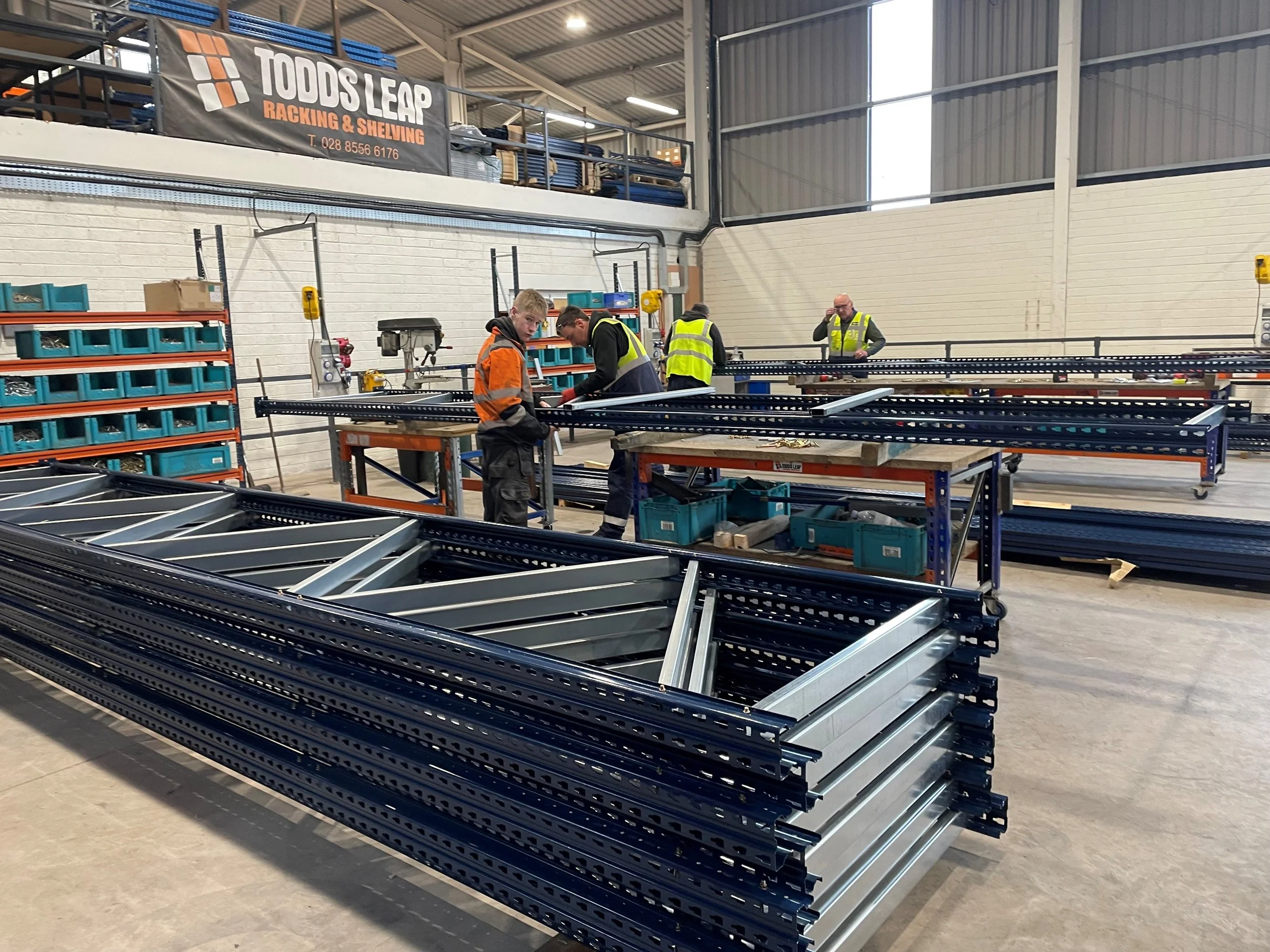
A responsible used-racking project should involve far more than measuring a warehouse and finding enough beams and frames to fill it.
The process should include:
Identifying the manufacturer, system and compatible components wherever reasonably possible.
Inspecting equipment and rejecting damaged, excessively corroded or otherwise unsuitable components.
Assessing the proposed configuration and loading rather than relying on what the equipment carried in its previous location.
Designing the installation around the customer's pallet weights, beam levels, clearances, handling equipment and operational requirements.
Providing appropriate loading information and load notices for the completed installation.
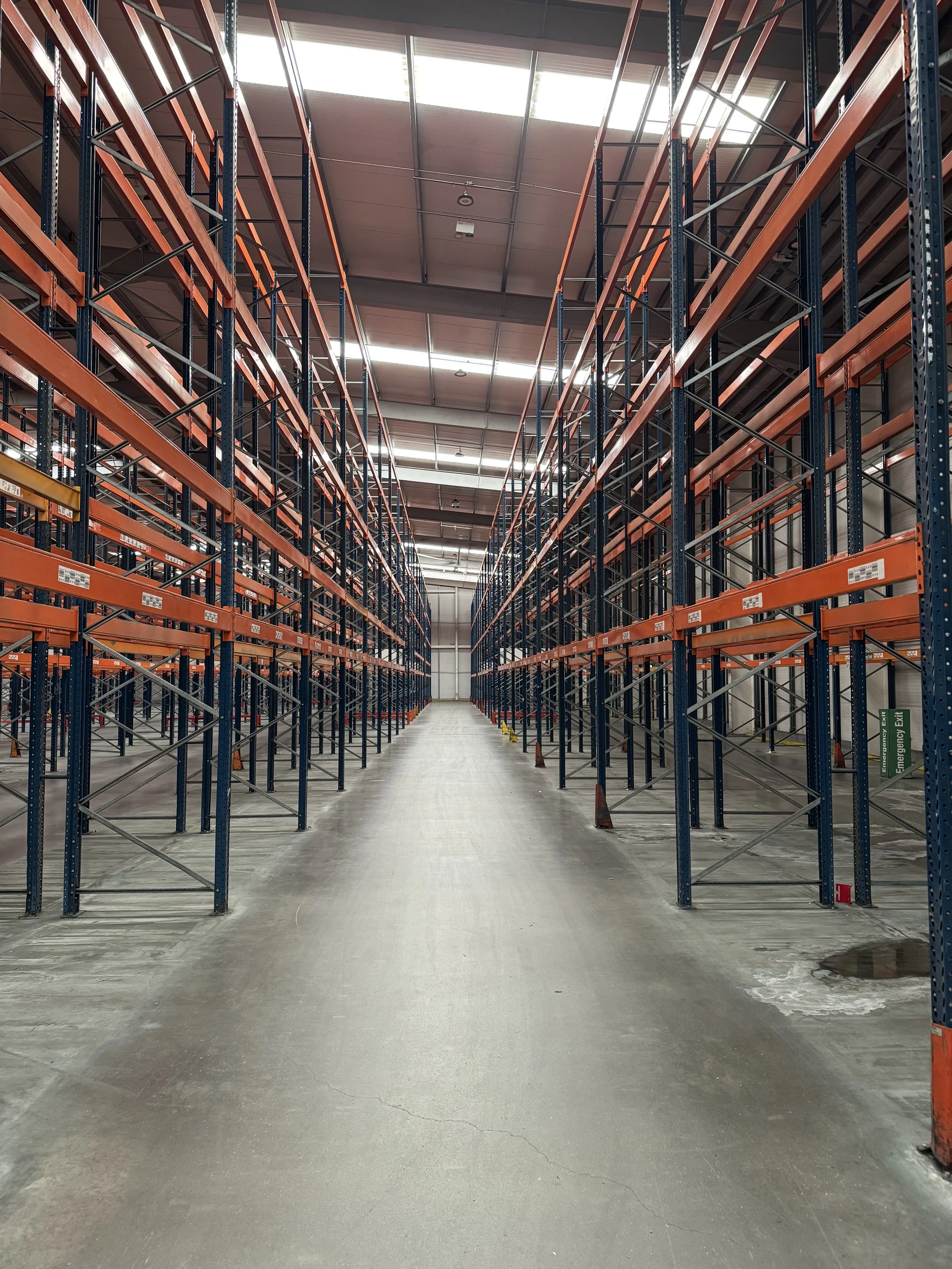
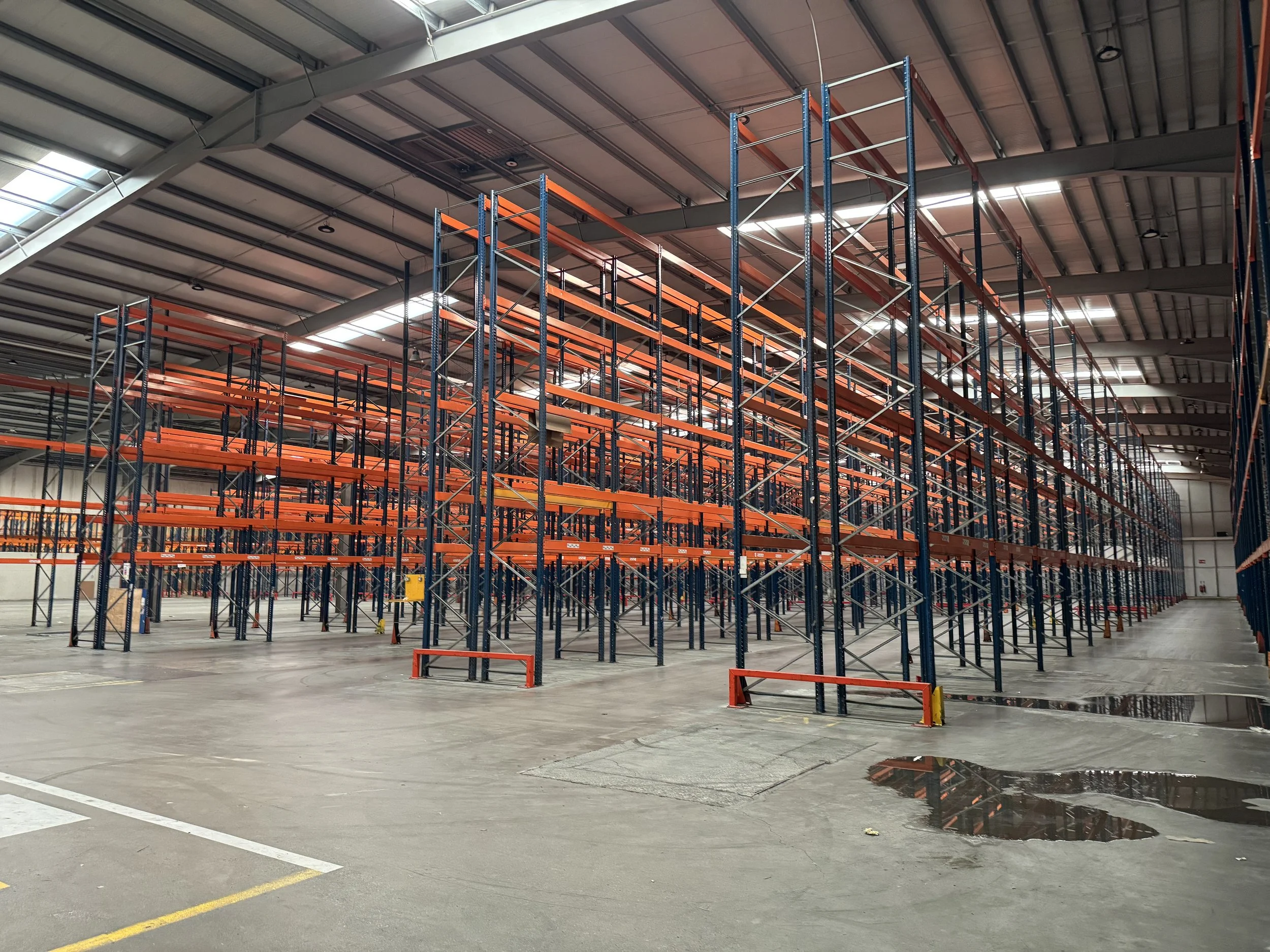
Installing the equipment competently and leaving the customer with a system that can subsequently be inspected, maintained and managed properly.
These are not arguments against used racking.
They are arguments against poor racking practice.
And those standards should apply whether the equipment being installed is six months old, six years old or brand new.
The strongest argument for used equipment is often not simply price
Cost is clearly one of the attractions.
A good-quality used system can provide substantial savings compared with purchasing an equivalent new installation, particularly where large quantities of compatible equipment are available.
But the commercial advantage can go considerably further.
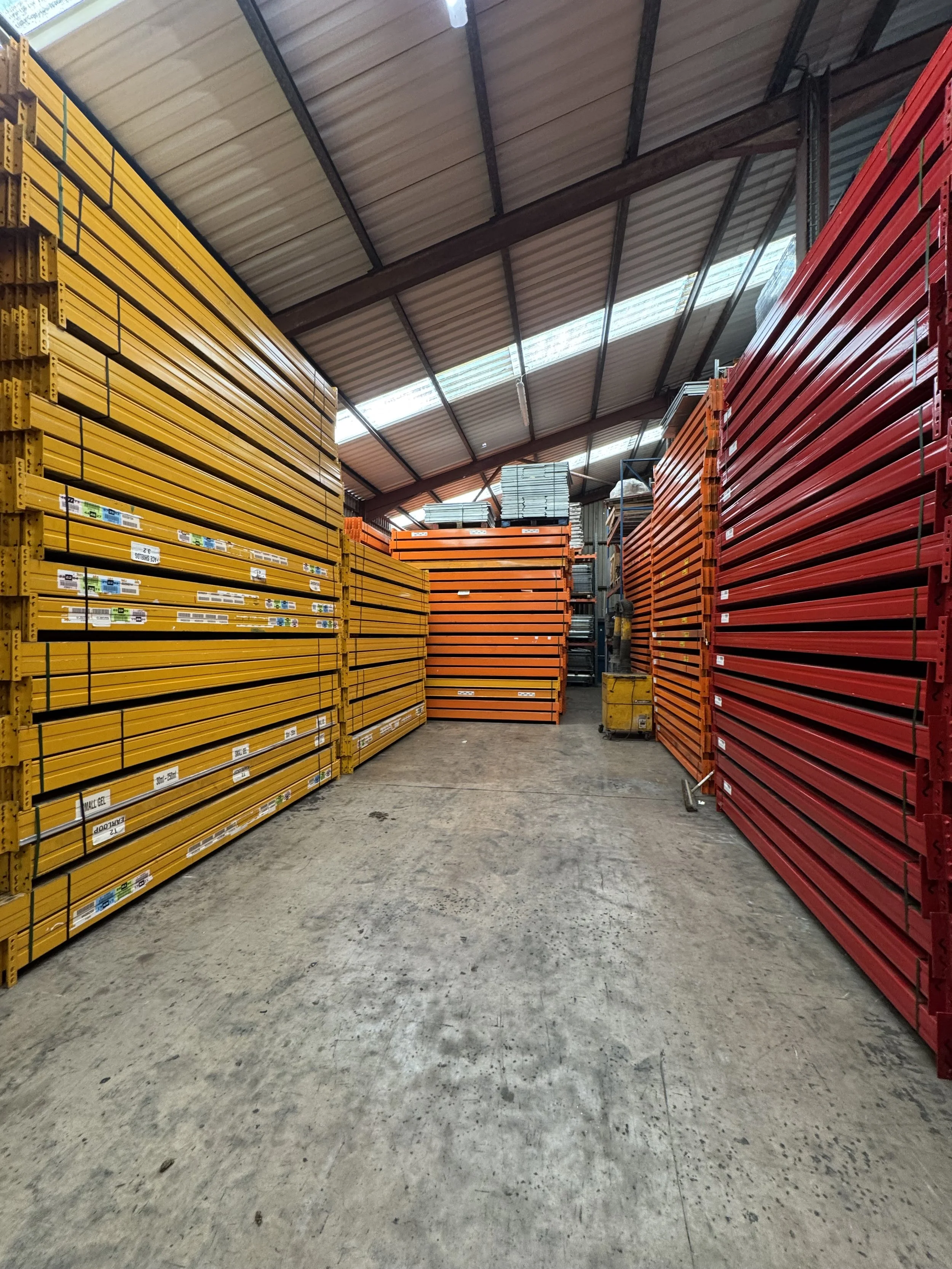
Used equipment can often be available immediately, avoiding manufacturing lead times and allowing warehouse expansions, relocations and storage alterations to be completed more quickly.
For a growing business, those savings can release capital for forklifts, automation, stock, production machinery or other areas where the investment may produce a greater commercial return.
There is also flexibility.
A knowledgeable supplier with access to significant stocks of established racking systems may be able to adapt an installation, increase storage capacity or integrate additional bays without requiring the customer to replace an entire warehouse simply because one element of the original layout has changed.
There is also a sustainability argument
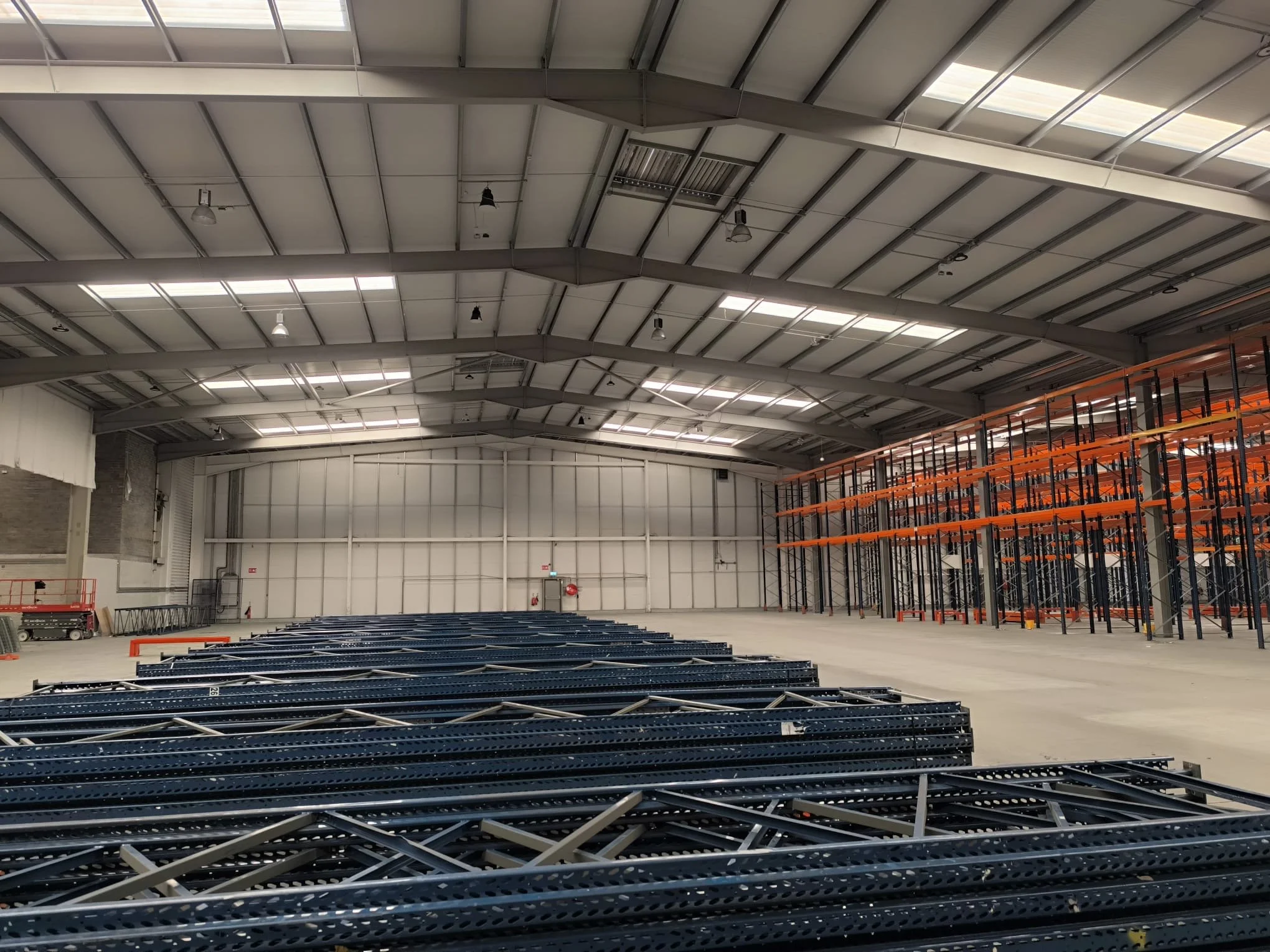
Steel is highly recyclable, but keeping a perfectly serviceable component in productive use can avoid the need to manufacture a replacement component in the first place.
Racking is, by its nature, modular.
Frames, beams and accessories are designed to be assembled, altered and reconfigured.
Where those components remain suitable for use, there is a strong argument for extending their productive life rather than automatically sending serviceable steel for recycling and manufacturing another component to replace it.
Safety must always come first.
But sustainability and safety are not mutually exclusive.
Perhaps we are asking the wrong question
Instead of asking:
“Is second-hand pallet racking safe?”
Perhaps businesses should be asking:
“Who supplied it, how was it assessed, what has it been designed to carry and who is responsible for the finished installation?”
Those questions expose poor-quality operators very quickly.
They also allow professional used-equipment suppliers to demonstrate the difference between genuine engineering and simply trading second-hand steel.
At Toddsleap Racking & Shelving, we supply both new and quality used storage equipment.
That is important because our objective is not to make the customer's requirement fit whichever product we happen to want to sell.
Our job is to find the storage solution that makes the most operational and commercial sense for that customer.
Sometimes that will be new equipment.
Sometimes it will be used.
And sometimes the strongest solution can be a combination of both.
What matters is that the equipment is correctly selected, inspected, designed and installed for the job it is being asked to perform.
Quality used racking should not be the cheap alternative. It should be the value-engineered alternative.
We support efforts to remove unsafe equipment and irresponsible suppliers from the racking industry.
They damage customer confidence and undermine businesses that invest in doing the job correctly.
But we should also be careful not to confuse second-hand with second-rate.
Properly sourced used pallet racking, backed by professional design, quality control, competent installation and appropriate loading information, can provide businesses with a robust, sustainable and highly cost-effective storage solution.
The question should never simply be:
“Is it new?”
The question should be:
“Is it right for the job — and can the supplier prove it?”