Rack Safety Awareness, Practical Training That Makes a Difference
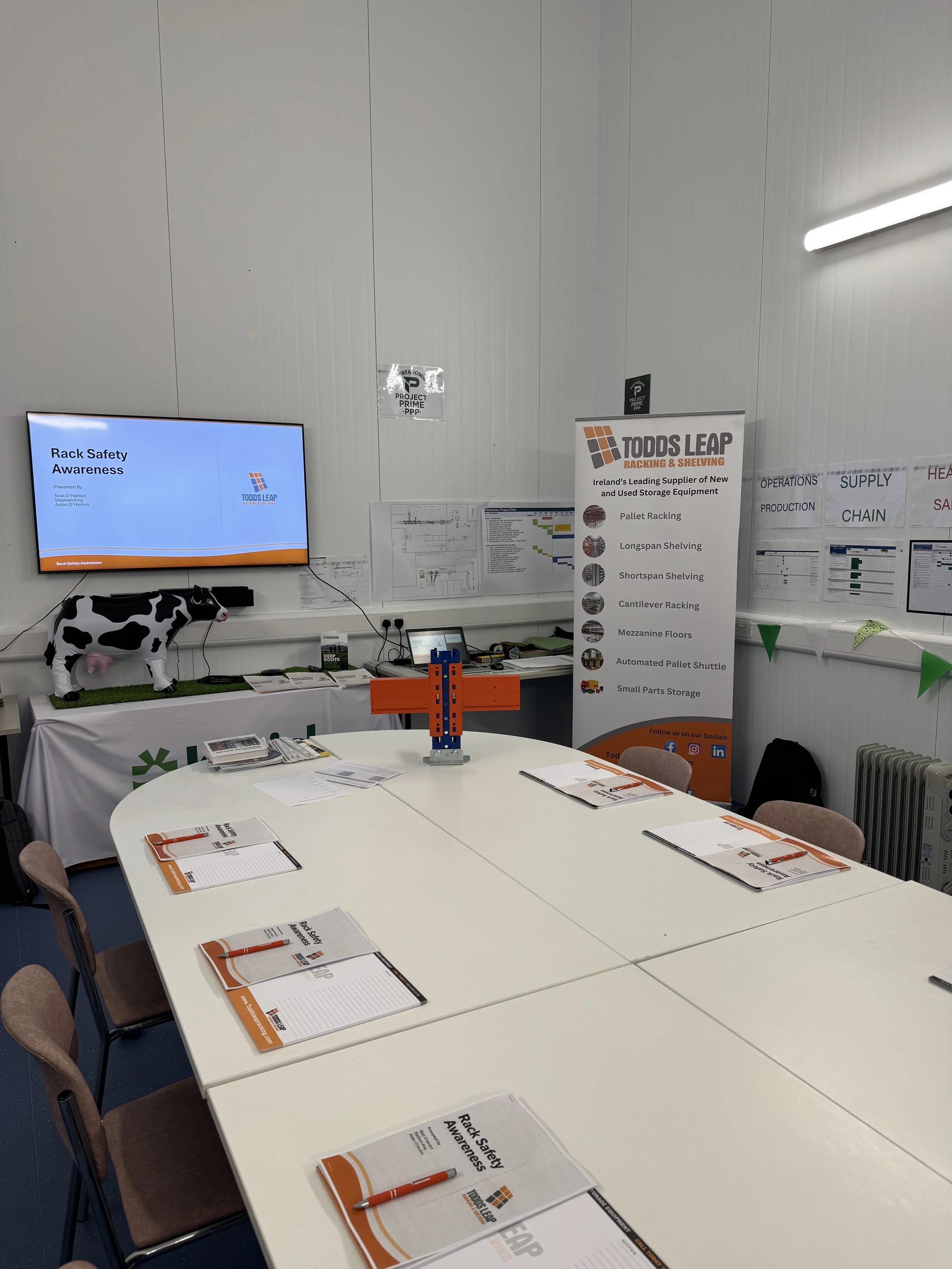
Rack Safety Awareness
Your team works around your racking every day. But would they recognise damage that needs attention, and know what to do next?
A bent upright, missing beam locking pin or unsuitable pallet can easily be overlooked in a busy warehouse. Recognising these issues early, and responding properly, is an important part of protecting your people, stock and operations.
At Toddsleap Racking & Shelving, we provide practical Rack Safety Awareness training tailored to your team, your storage systems and the way your business operates.
Understanding your responsibilities
Racking is work equipment, and employers have responsibilities for its suitability, condition and safe use. Those responsibilities include appropriate inspection, maintenance and staff training.
In Northern Ireland, the relevant legislation includes the Provision and Use of Work Equipment Regulations (Northern Ireland) 1999, commonly known as PUWER. In Great Britain, the corresponding regulations are PUWER 1998. These place duties on businesses to provide suitable equipment, maintain it safely and ensure staff receive adequate information, instruction and training. HSENI guidance, HSE guidance
In the Republic of Ireland, similar responsibilities arise under the Safety, Health and Welfare at Work Act 2005 and the Safety, Health and Welfare at Work (General Application) Regulations 2007, as amended. These address the safe use, inspection and maintenance of work equipment, alongside appropriate staff information and training. PUWER itself does not apply in the Republic of Ireland. Irish work equipment regulations
Our course helps teams understand how these responsibilities apply to the racking they use every day.
Training tailored to your workplace
Every warehouse operates differently. The racking layout, goods stored, handling equipment and daily activity all influence the risks your team needs to recognise.
We work with you to tailor the training to your own systems and staff responsibilities. When delivered at your premises, the course can include a practical warehouse walk through, subject to safe access and site arrangements.
This gives attendees the opportunity to examine their own racking with guidance, identify potential damage and learn how to describe and locate concerns accurately. It also creates space to discuss questions specific to your operation.
The course can cover:
Recognising damage to uprights, beams and bracing.
Understanding beam locking pins, baseplates, fixings and rack protection.
Reading load notices and understanding loading limits.
Recognising unsuitable pallets, poor load placement and unsafe practices.
Understanding why changes to rack configurations need proper assessment.
Recording damage by aisle, bay and component.
Understanding damage classifications and when to escalate concerns.
Organising routine checks, reporting and follow up action.
More than a box ticking exercise
The purpose of the course is to give people useful knowledge they can apply when they return to work.
Attendees should understand where to look for damage, why seemingly minor issues deserve attention and who needs to be informed. Clear reporting helps the business assess concerns and arrange appropriate action before problems are allowed to develop.
We also encourage prompt reporting of impacts and damage. Staff need to feel confident raising a concern, even when no obvious damage is visible.
The training is suitable for warehouse operatives, forklift drivers, supervisors, maintenance teams and those responsible for health and safety. A course certificate alone does not establish compliance, its value comes from putting the learning into practice.
Supporting safety between expert inspections
An expert inspection assesses racking at a particular point in time. Damage can occur the following day, so staff awareness and routine checks remain essential.
HSE’s warehouse guidance recommends prompt damage reporting, recorded visual inspections at weekly or other intervals based on risk assessment, and expert inspections by a technically competent person at intervals of no more than 12 months. HSE warehousing guidance
Our awareness course supports those everyday checks and reporting arrangements. It does not qualify attendees as SEMA Approved Racking Inspectors or replace an expert inspection.
SEMA Approved Racking Inspectors across Ireland and the UK
Toddsleap Racking & Shelving also offers racking inspections carried out by SEMA Approved Racking Inspectors across the island of Ireland and throughout the UK.
Alongside staff training, these inspections help businesses understand the condition of their racking and identify issues requiring attention. Together, practical awareness, routine checks and expert inspections support a more consistent approach to managing rack safety.
At our premises or yours, for small and large groups
We deliver Rack Safety Awareness training at our premises or at your own site, with arrangements available for small teams through to larger groups.
We work with you to plan suitable sessions around your operation, giving attendees the opportunity to participate, ask questions and relate the training to their own workplace.
for further information Contact Toddsleap Racking & Shelving to discuss and arrange a tailored Rack Safety Awareness training or a racking inspection for your business.